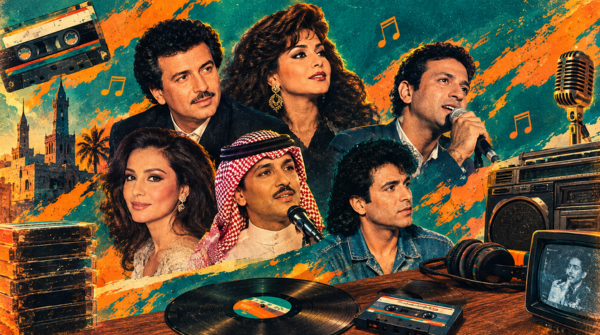
How can a song released thirty or forty years ago return to today’s playlists, become a trending sound on TikTok and Instagram, and find a new audience that was not even alive when it was first released?
At a time when music is constantly changing and dozens of new songs are released every day, it may seem that the music of the past has completely disappeared. Yet the opposite is true. The sounds of the 1980s and 1990s are making a comeback. Sometimes unexpectedly, old songs appear in short videos, clips from archived concerts go viral, and a new generation begins searching for artists and songs that were never part of their own memories.
From cassette tapes and CDs to YouTube, Spotify, and TikTok, these songs have travelled a long way. But the question remains:Why are they coming back now?
Is it simply nostalgia for a time that has passed? Or is there something about this music itself that allows it to transcend time? And was technology responsible for bringing these songs back to life, or did audiences simply rediscover their value?
Perhaps the answer lies in a combination of all these factors.
Nostalgia for a Time That No Longer Exists
It is difficult to talk about the music of the 1980s and 1990s without talking about nostalgia.
For those who lived through those years, a song is not connected only to its sound or melody. It is often tied to an entire collection of personal memories: childhood, adolescence, school, friends, relationships, special occasions, television, radio, and even the way everyday life looked and felt.
Sometimes, hearing just a few seconds of a familiar musical introduction is enough to bring back memories of an entire period of life.
But the paradox is that nostalgia is no longer limited to people who actually experienced that era.
A generation that never knew cassette tapes, and may have seen a CD player only in pictures, is now listening to the same songs and connecting with them.
For this generation, the song is not a memory but a discovery.
This is where nostalgia becomes more than a personal experience. It becomes a cultural phenomenon that can move across generations.
From the Archive to the Algorithm
In the past, access to an old song depended on the tapes or CDs available at home, or on what radio stations and television channels chose to play.
Today, the equation has completely changed.
Digital platforms have become a kind of open musical archive. A song released decades ago can exist alongside the latest releases, and users can access it within seconds.
YouTube, digital streaming platforms, and search engines have made discovering old music much easier.
A song no longer needs to be currently available on the market to reach listeners. It simply needs to exist somewhere in the digital archive.
More importantly, platforms do not always wait for users to search for these songs. Sometimes, the algorithm itself recommends them.
A user may start with a modern song, then discover another artist, followed by an older track, and eventually find themselves exploring music from completely different decades.
TikTok: When a Short Clip Becomes a Gateway to a Full Song
TikTok may be one of the most important places where the way people discover music has changed.
In the past, a song needed repeated exposure on the radio or television to become widely known. Today, just a few seconds of a track can be enough to bring an old sound back into circulation.
One person may use a clip from a song in a video, and then thousands of users reuse the same sound in completely different contexts.
Suddenly, people start asking:
Who sings this song?
What is its title?
When was it released?
Where can I listen to the full version?
In this way, a short clip can serve an entirely different purpose: turning a song from archival material into an object of search and discovery.
This has also changed the concept of musical success. A song no longer needs to be new to become popular again.
But Is the Algorithm the Only Reason?
Not necessarily.
Algorithms can help a song reach an audience, but they do not fully explain why people continue to engage with it.
There is another factor: the song itself.
Many listeners believe that part of the appeal of music from that era comes from its clear melodies, memorable hooks, and strong musical structures
A song with a memorable melody can remain in people’s minds for a very long time, even when technology and listening habits change.
Many songs from that period also relied on lyrics that told a story or conveyed a clear emotional state, making them easy to rediscover decades later.
A Different Sound in an Era of Similarity
Another factor has little to do with nostalgia: the desire to discover something different.
With the enormous volume of music being produced today, some listeners may feel that certain sounds, styles, and production techniques have become increasingly similar.
In this context, older music can become a new experience for younger listeners.
The instruments, arrangements, recording techniques, song lengths, vocal styles, and even the character of the sound can give listeners the feeling that they are entering a completely different musical world.
And this is where the paradox becomes clear:
What one generation considers old may feel new and different to another.
An Old Song Does Not Always Return in the Same Form
The return of an old song does not necessarily mean that audiences are listening to it in exactly the same way as its original listeners did.
Sometimes it comes back through a remix or a new arrangement. Other times, it returns through a short clip, a scene from a film or series, a TikTok video, or content recreating the atmosphere of a particular era.
The song therefore enters a new context.
A song that was once associated with a concert or a cassette tape may now become background music for a video about fashion, travel, relationships, or memories.
In other words, technology does not simply bring the song back. It reinterprets it as well.
The Image Also Brings Music Back
It is important to remember that the return of 1980s and 1990s music is not happening through sound alone.
There is also a renewed interest in the visual identity of those decades: clothing, hairstyles, album covers, music videos, old recording devices, and even the style of advertising.
This creates a complete experience.
Listeners are not simply discovering a song. They are discovering its entire cultural and visual world.
Music therefore becomes part of a broader phenomenon: the rediscovery of the past.
From an Old Artist to a New Star for an Entire Generation
One consequence of this phenomenon is that artists who were already well known in their time can suddenly gain an entirely new audience.
A young user may hear a single clip on TikTok, then move to YouTube to watch old interviews, concerts, and other songs by the same artist.
In other words, digital platforms do not simply revive a song. They can reintroduce the artist themselves to an audience that never knew them.
The archive becomes a starting point for discovering an entire artistic career.
Between Nostalgia and Discovery
There may be no single answer to the resurgence of 1980s and 1990s music.
For the generation that lived through that period, it is memory.
For another generation, it is discovery
For digital platforms, it is content that can be continuously recirculated
And for the music itself, some works may continue to resonate because they possess qualities that transcend the moment of their release: a clear melody, memorable lyrics, distinctive performances, and an artistic identity strongly connected to an entire era.
From cassette tapes to CDs, and from radio and television to YouTube, Spotify, and TikTok, the way music reaches audiences has changed.
But one thing has remained the same:
A song that leaves a lasting impression can always find its way into a new listener’s ears, no matter how much time has passed.
Perhaps that is the real secret behind the return of 1980s and 1990s music:
The past did not come back to us exactly as it was… We simply discovered it again, in a different way.
Jihen zemzmi
